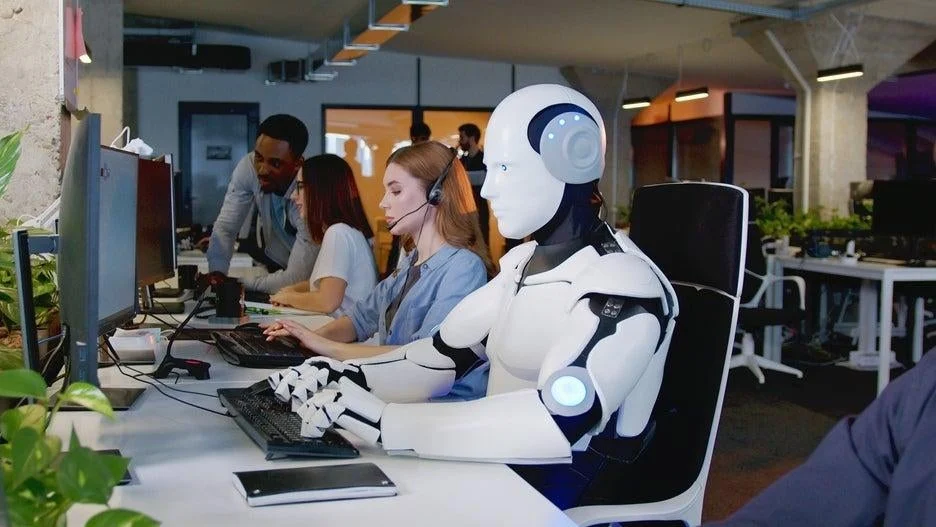
The last call sheet sits on an empty table. A publicist texts about a canceled reading. A designer deletes a client’s brief and stares at their screen.
I’ve been tracking the contours of this shift, and you’ve probably felt a version of it — fewer gigs, tighter budgets, an inbox that used to mean possibility and now often means replacement. AI is a rising tide that lifts some boats and floods others.
Here’s what I want you to have straight: the data, the forces at work, and the moves you can actually make when algorithms start to shape paychecks. I’ll show you where the losses are concentrated, which tools and platforms are in the mix, and why some creative jobs keep growing while others vanish.
On a newsroom desk, the spreadsheets went quiet — The scale of the job collapse
The U.S. creative workforce has been shrinking fast. Using Bureau of Labor Statistics figures, economist Joseph Politano of Apricitas Economics calculates more than 200,000 lost jobs across film, TV, publishing, graphic design and related sectors over four years, with roughly 50,000 of those disappearing in the last year alone.
Politano calls it “one of the worst stretches for media employment in modern US history.” The pattern isn’t uniform: roles tied to digital production—graphic design, broadcasting, publishing, movie and sound recording—have fallen since ChatGPT’s launch in November 2022, while in-person sectors such as museums and performing arts have kept hiring.
Are creative jobs being lost because of AI?
Short answer: not entirely, but AI is an accelerating force. Politano warns it’s hard to isolate AI from long-running pressures: media consolidation, production moving overseas, and the influencer economy reshaping attention and ad dollars. Still, the timing and the affected job categories line up with the spread of generative models—OpenAI’s GPT family, Midjourney, Stable Diffusion, DALL·E, Adobe Firefly—and the new tools publishers, studios, and agencies use every day.
On a soundstage, chairs go empty after wrap — Where film and sound recording took the hardest hit
The film and TV workforce has lost more than 100,000 jobs over four years—nearly one-third of its personnel, according to Politano. Production slims, crews shrink, and freelance lists dry up.
Several forces converge: streaming services tightened budgets after overexpansion, some productions shifted abroad for cost reasons, and studios automated aspects of post-production with AI tools that can generate visual effects, dialogue edits, and sound design prototypes. The result is a rapid thinning of roles once considered indispensable.
Which creative industries are most affected by AI?
At the front of the line are film and sound recording, publishing, graphic design, and broadcasting. Roles that are highly digital and repeatable—basic layout, background illustration, transcription, stock audio—are most exposed to generative models. In contrast, sectors dependent on live presence—museums, live theater, concerts—have been more resilient.
At a bookstore counter, a customer carries a stack of BookTok hits — How past tech shocks rewired creative pay
When streaming and piracy hollowed out recorded-music revenues, the industry didn’t disappear; touring and merch became lifelines. More recently, BookTok revived sales for titles that were otherwise languishing.
Politano points out these precedents because they matter: creative work has a history of producing unpredictable spillovers. New tech can strip away one revenue channel and create another. The question is whether those new channels compensate in time and scale for lost jobs—or whether the losses become structural.
At your inbox, another lowball arrives — Practical moves if you make things for a living
You can’t control every market force, but you can shape your exposure. I recommend three practical paths:
- Reprice and reframe: Charge for outcomes machines don’t deliver—curation, concept, relationships, and bespoke performance. If you teach a masterclass or run a live event, you monetize presence.
- Master the tools on their own terms: Learn GPT-4 prompts, experiment with Midjourney or DALL·E for ideation, and use Adobe Firefly to speed workflows. That doesn’t make you replaceable—it can make you harder to replace.
- Build diversified income: Licensing, tours, workshops, newsletters, Patreon, or branded collaborations can stabilize cash flow when commissions fall.
The chessboard has been reset in months rather than years; the job market is a chessboard reconfigured overnight. That means speed matters—but so does discipline.
Will AI replace creative workers?
It will replace some tasks, not the whole of creative work. Generative models handle repeatable, pattern-driven jobs well; they struggle with sustained narrative vision, trust-based client relationships, and the chaotic logistics of production. Policy, collective bargaining (think strikes and union leverage), and platform rules will shape how much of the lost work comes back and in what form.
There’s a chance new cultural channels—unexpected platforms, experiential formats, or licensing markets—could create growth that offsets declines. There’s also a real risk of a long tail of underpaid freelancers and fewer entry points for emerging artists. Where do you place your bet: retrain, specialize, or pivot—and how fast will you do it?