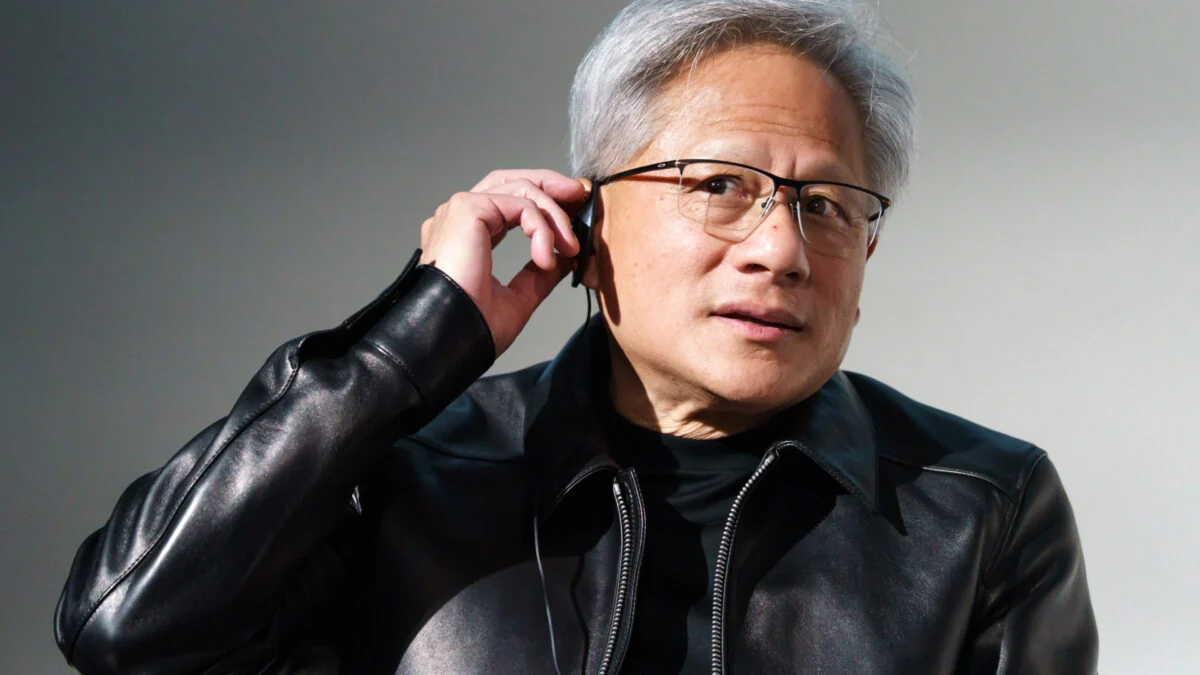
The boardroom went quiet as the phone on the table lit up with alert after alert. I watched the ticker blink while whispers hardened into a single blunt question. You feel that kind of corporate snap—the moment reputations fracture and a company recalibrates fast.
Someone reportedly filmed Jensen Huang and Kimberly Powell being affectionate at a San Jose hotel
That single, raw image—reported by The New York Times but not released publicly—became the spark. According to five sources, the footage shows Nvidia CEO Jensen Huang and Kimberly Powell, the company’s vice president of health care, together at a company conference in March. Two sources say security then confronted the filmer and pressed for a nondisclosure agreement.
I’ve followed executive scandals long enough to know a videotape is the kind of evidence that shortens deliberation. You don’t need every detail to feel the weight: HR policy at Nvidia forbids relationships like this, and the optics are simple and corrosive.
Will Jensen Huang be forced to resign?
Short answer: the board is moving fast. The Wall Street Journal reported an emergency meeting and preparations to remove Huang, possibly within hours. Yorkville Ives analysts said Huang’s tenure could be “numbered” and even modeled Nvidia at $300 (€280) if he stayed versus $225 (€210) without him.
Nvidia shares fell within minutes of the reports, sending traders into damage control
After the NYT article hit, Nvidia stock plunged more than 8% in after-hours trading. Market moves like that don’t wait for legal niceties—investors price risk now, and a CEO vacancy at a company that recently chased world-beater status is a major risk.
I want you to picture the feedback loop: an unsteady leadership narrative fuels selloffs, which fuel more scrutiny from regulators, boards, and lawmakers. That spiral is exactly what analysts warned about when they described a “black eye moment” and a “spider web of complexity.”
How did the alleged affairs affect Nvidia stock?
Short-term: volatility and a sharp after-hours drop. Medium-term: analysts are split on valuation scenarios tied directly to Huang’s presence. Long-term: the company must prove continuity—or the market will price in permanent discounting of future growth.
A Megaspeed link and a lobby angle brought national-security pressure into the room
Alice Huang, the former Megaspeed managing director accused of being a Chinese spy, is already a headwind for Jensen. Reports say she continued to act in Megaspeed dealings with Nvidia even after resigning, and a Culper Research report suggested she still exerted control inside Megaspeed.
You can see how geopolitics turned a sex scandal into a national-security story: a senator called for Huang’s resignation, and questions rose about what President Donald Trump and Commerce Secretary Howard Lutnick knew and when. Bloomberg and the Washington Post reported the administration was briefed months ago but declined to intervene in the board’s choice—boards, not presidents, usually pick CEOs.
Board culture, succession gaps, and the vacancy problem lay open for everyone to judge
The extraordinary detail here isn’t just infidelity; it’s the apparent absence of a viable succession plan. Sources say Nvidia has no clear heir apparent, and the company has already hired an outside firm to scout replacements. That’s the corporate equivalent of leaving the front door unlocked.
I’ll tell you what I would watch next: who on the board moves first, what counsel is hired, and whether regulators sniff any violations beyond personnel policy. The WSJ, Bloomberg, and the NYT are all circling—press coverage and shareholder pressure together create an unforgiving timetable.
Did Jensen Huang break Nvidia’s company policy?
According to Nvidia’s published code of conduct, relationships between executives and direct reports are prohibited. If the reports are accurate, this isn’t just embarrassing; it’s a clear policy violation that supports swift corrective action from a governance standpoint.
The media trail is fast: The New York Times broke the second-affair narrative, the Wall Street Journal reported the board reaction, Bloomberg flagged outside recruiters, and Culper Research had already stoked questions about Megaspeed ties. I’m naming the players so you can follow who’s influencing the frame: Nvidia, Megaspeed, Culper Research, The New York Times, The Wall Street Journal, Bloomberg, Yorkville Ives, Senator Kevin Cramer, President Donald Trump, and Commerce Secretary Howard Lutnick.
There are two ways this plays out: a quick, surgical removal with a calming succession plan, or a slow-burn governance crisis that drags through quarters. I’ve seen both. The first stabilizes markets; the second rewrites executive risk premiums for years.
This is a breaking news story and may be updated as more information becomes available.
Latest update: 9:12 p.m. on 11/11/2026: This story has been updated with a statement from Yorkville Ives. Its headline has also been updated.
If you were sitting on that board tonight, what would you do next?