I was mid-match when my Discord blew up — players swapping screenshots, prices, and quick math. You felt it: a small line in a patch note suddenly tugging at your wallet. I want to walk you through what changed, why it matters, and what you should watch next.
You can already see the conversations lighting up across Steam and Discord. Arc Raiders is changing regional prices ahead of patch 1.27, which lands on May 5, 2026.
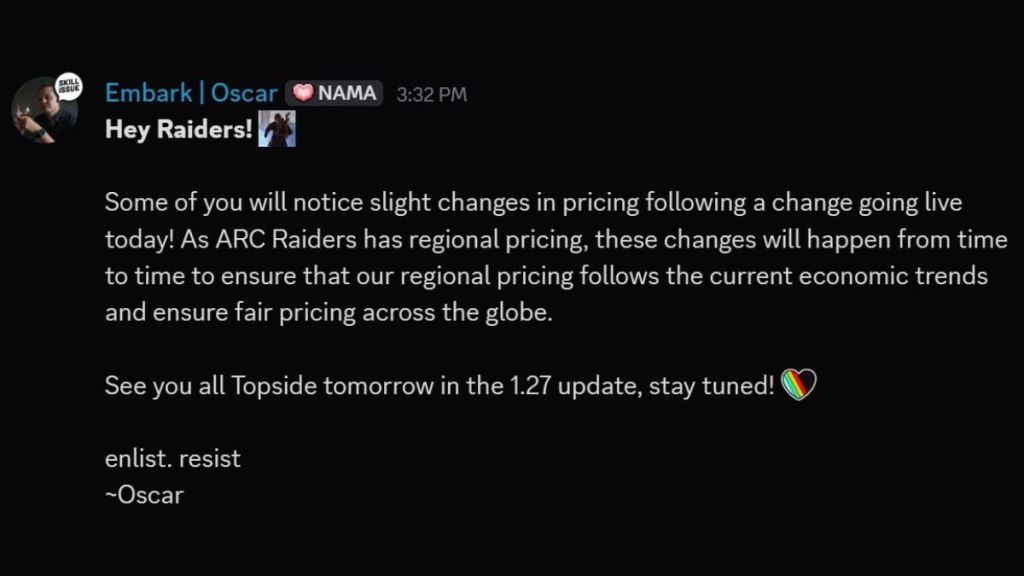
I saw the studio’s community lead, Oscar Lundberg, post on the game’s official Discord: “Some of you will notice slight changes in pricing following a change going live today! As ARC Raiders has regional pricing, these changes will happen from time to time to follow the current economic trends and keep pricing fair across the globe.” I’ll be blunt — the full quote reads like a safety valve: small adjustments meant to realign store prices with shifting exchange rates after last week’s Riven Tides update.
Will Arc Raiders’ prices go up for me?
You’re not the only one asking. The studio uses regional pricing rather than a single global SKU pegged to the US Dollar. That means local store prices can shift when currencies wobble against the USD. For context: many digital SKUs in the US sit around $19.99 (€18). A typical UK price like £15 would convert to about €17, while an Indian price of ₹999 is roughly €11. These are rounded examples to show the math behind the curtain.
How this plays out for you depends on your local store and whether the developer adjusts up or down in your currency band. Small tweaks are common; sudden, large jumps are rare unless there’s a major currency collapse or a policy change from a platform like Steam or the consoles.
On Steam, mixed reviews and active threads show players are paying attention. What the price edits actually mean for the game’s future is more than a numbers game.
If you follow live-service economics, you know the delicate balance: you want a healthy player base and a revenue model that keeps updates coming. The studio’s latest message came right after Riven Tides, and the 1.27 update is being billed as a refinement patch. Think of the pricing tweaks as a thermostat adjustment after a heat wave — small, targeted, meant to keep the system stable.
I’ve watched other developers react to currency swings by changing store bands, running regional discounts, or re-pricing bundles. Platforms matter here: Steam’s regional storefront, Xbox and PlayStation stores, and digital wallets each have their own rounding rules and tax treatments. When a studio nudges prices, the ripple runs through storefronts, influencers, and community threads — and then, finally, to purchase decisions.
Why did the developer change regional prices now?
Short answer: currency movement and post-update housekeeping. The studio framed the change as administrative — aligning regional pricing with current economic trends and maintaining what they called “fair pricing.” Given the timing, it looks like a preparatory step before 1.27 lands on May 5, 2026, after the big Riven Tides release.
There’s another layer: public perception. Arc Raiders has been a strong performer in the extraction-shooter space but has “Mixed” reviews on Steam. A careful pricing shift signals the developer is watching player goodwill and long-term sustainability. Pricing can be a small lever with outsized PR consequences: raise it clumsily, and you ignite backlash; adjust it transparently, and you keep people playing.
The storefront is a battlefield where trust and price points spar for attention.
What should you do right now? If you’re planning purchases, check your platform store after the patch goes live. If you’re a buyer who tracks deals, set a wishlist on Steam or follow the game’s Discord for real-time notes from the community lead. If you’re watching the market as a player or a content creator, note how the studio frames each change — the messaging often matters more than the cents.
I’ll be watching the thread metrics and Steam activity myself; you should too. Do these small price nudges protect the game’s future or quietly shrink your purchasing power — which side are you on?