The lights snap on. Someone checks their phone and realizes two summer giants are still clawing for new records. I remember the hush—then the room explodes when the final frame hits.
I’ve been tracking box-office moves since Nolan’s resurgence and Marvel’s latest swings, and you should pay attention: these numbers aren’t routine. You’ll see why cinemas and studios are rewriting expectations now.
At a midnight screening in New York, ticket counters kept blinking past expectations. The Odyssey is now Christopher Nolan’s highest-grossing film.
After its third weekend, The Odyssey added another surge and now sits at $461.1 million (€429 million) domestic, according to The Hollywood Reporter. That single figure nudges Nolan past his own Dark Knight sequels: Dark Knight Rises ($1.085 billion; €1.01 billion) and The Dark Knight ($1.005 billion; €935 million).
That kind of climb feels like a tidal wave across the awards-season and summer calendars—audiences are still willing to pay premium prices for a director’s vision even when the film skews R. It’s also the second-biggest R-rated title, domestic and global, since 2024’s Deadpool & Wolverine, which says as much about appetite as it does about marketing muscle.
I watch Nolan’s brand the way some people follow a stock ticker—you can see momentum, risk, and a rare kind of trust from repeat viewers. Industry outlets from The Hollywood Reporter to Box Office Mojo are cataloging each milestone; studios like Warner keep an eye on how auteur-driven films insert themselves into blockbuster charts.
Is The Odyssey Nolan’s highest-grossing film?
Yes. With $461.1 million (€429 million) domestically, it overtook the combined legacy of the Dark Knight sequels and now tops Nolan’s chart. The milestone is confirmed by box-office trackers and major trades.
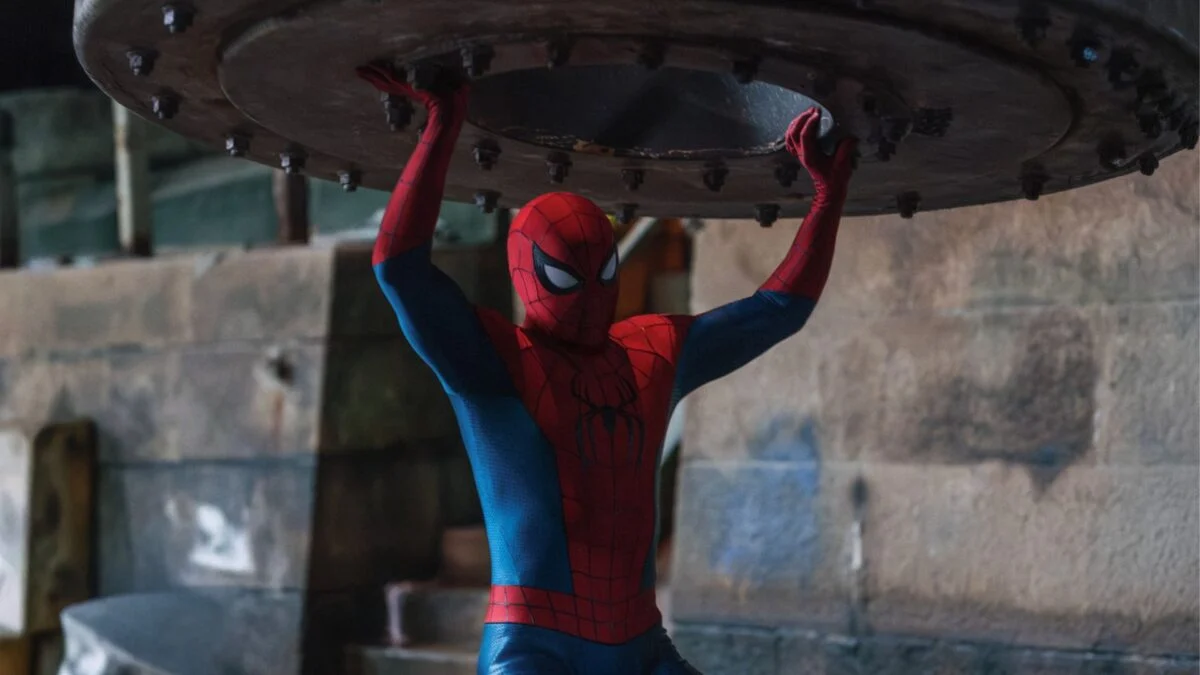
Outside a suburban multiplex, lines for Spider-Man were still wrapping around the lot. Spider-Man: Brand New Day is sprinting through its second weekend.
Sony and Marvel’s latest pushed roughly $145 million (€135 million) in its sophomore weekend—good for one of the biggest week-twos ever. Variety notes only a handful of films have cleared $100 million in their second weekends: Star Wars: The Force Awakens ($149 million; €139 million) and Avengers: Endgame ($147 million; €137 million) lead that list.
To date, Brand New Day has hauled in $655 million (€609 million) domestically and about $1.67 billion (€1.55 billion) worldwide. That pace places it within striking distance of No Way Home and turns the global race into a high-stakes chess match between legacy titles and franchise evolution.
If you follow Sony’s and Marvel’s release strategies—trailers, Prime and Disney+ windows, and international marketing—you’ll see deliberate pushes to broaden the audience beyond core comic fans. Studios are using early-week premium screenings, Fandemonium events, and influencer campaigns to keep the momentum alive.
How much has Spider-Man: Brand New Day made?
So far: $655 million (€609 million) domestically and $1.67 billion (€1.55 billion) worldwide. That’s enough to make it the highest-grossing movie of 2026 so far.
Can Brand New Day surpass No Way Home’s record?
It’s close. No Way Home stands at $1.921 billion (€1.79 billion); Brand New Day is moving fast. If weekend holds and global legs remain strong—especially in markets like China and Latin America—surpassing that mark is plausible within a few weeks.
In line at a concession stand, you overhear debate about what’s next for summer. A slate of August genre films could test Spider-Man’s grip.
Heads-up releases include The End of Oak Street (August 14), Insidious 6 and It Ends (August 21), and Coyote vs. Acme (August 28). Each brings different studio playbooks—horror’s low-cost returns, franchise fatigue risks, and animated family draws that compete for late-summer audiences.
Studios will lean on data tools from Comscore and social analytics platforms to fine-tune campaigns. You’ll notice more targeted ads, refreshed trailers on YouTube, and partnerships with local exhibitors to maximize hold. The question is whether any of these films will steal domestic or global crowns from Spider-Man—history says it’s hard once a title hits billion-dollar territory, but surprises happen.
I’ve watched these cycles long enough to know trends can flip fast: a single international market or an awards nod can rewrite projections. You’ll be tracking opening-day tallies on Variety, The Hollywood Reporter, and Box Office Mojo—so will I—but the real drama is how audiences decide to spend their evenings. Which of these tentpoles will prompt mass abandonment of Spider-Man and Nolan’s momentum?