I watched the call come through on a Thursday afternoon: a San Francisco startup promising to move its compute appetite offshore. The CEO’s line was calm; the subtext was urgent. You could feel the map of power shifting under everyone’s feet.
I’ve followed deals like this for years. When a small AI company chooses foreign kilowatts over American soil, it tells you more about politics than technology. Below, I walk you through why Together AI’s new tie-up with Humain in Saudi Arabia matters, what it says about local pushback, and the risks the move exposes.
A San Francisco startup just secured 250 megawatts from Saudi data centers — and it’s not a minor technical tweak
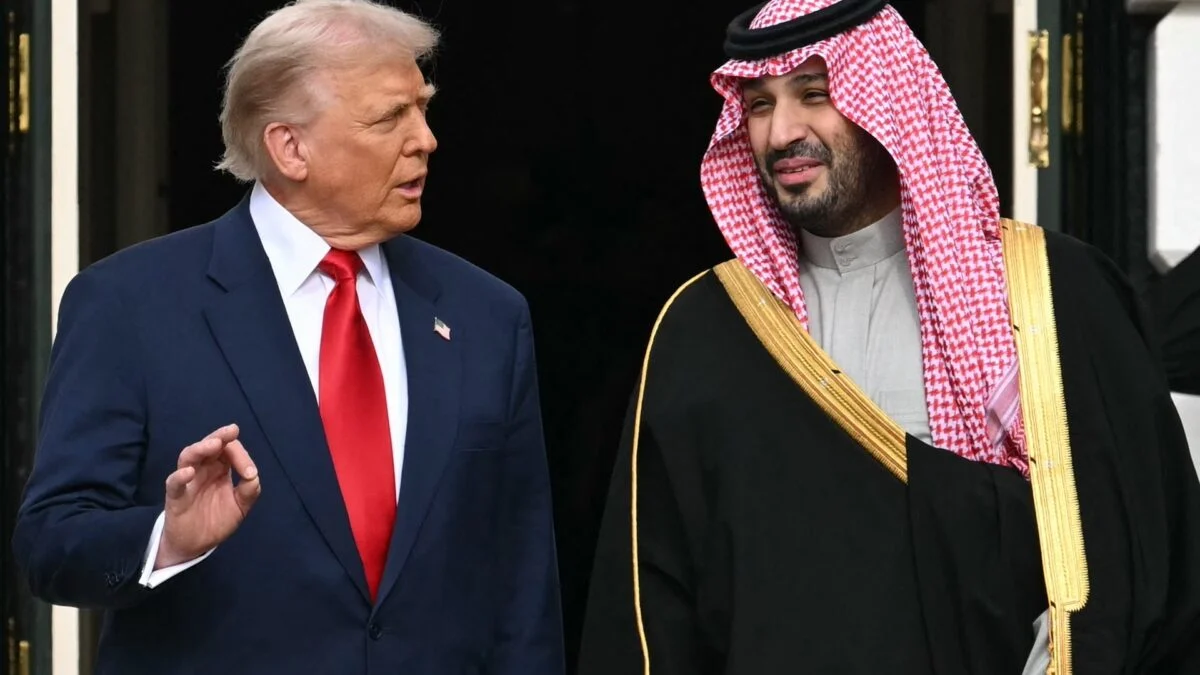
Together AI announced it will draw access to 250 megawatts from data centers inside Saudi Arabia through a partnership with Humain, the Riyadh-based AI company founded by Crown Prince Mohammed bin Salman. That number of megawatts can power thousands of servers and whole clusters of large language-model training rigs.
Who’s involved: Together AI (San Francisco), Humain (Saudi), and Humain’s CEO, Tareq Amin. The deal gives a U.S. startup a way to keep scaling while sidestepping growing hostility at home.
Nearly half of Americans strongly oppose new data centers in their backyards — and that opposition is reshaping capacity
Nearly 48% of Americans told Gallup they “strongly oppose” new data centers nearby. You can feel the emotion: communities worried about power use, water, and changing landscapes.
Why are Americans opposing data centers?
Local opposition is driven by concrete fears: massive energy draws, groundwater use in water-stressed regions, and a sense that giant server farms change the character of towns overnight. Developers counter with jobs and tax revenue, but those talking points don’t always displace the smell of diesel generators or the sight of acres of cooling infrastructure.
Together AI’s CEO, Vipul Prakash, told reporters that cancellations and moratoriums are making U.S. capacity scarce. From an operator’s view, moving load to friendly jurisdictions is a tactical fix. From a resident’s view, it feels like exportation of a problem.
A $600 billion pact signed in May 2025 between the U.S. and Saudi Arabia now includes big cloud promises — and that changes incentives
The Trump administration secured a $600 billion (€552 billion) investment commitment from Saudi Arabia in May 2025, with the Saudis pledging $20 billion (€18.4 billion) toward new data centers inside the U.S. in exchange for defense purchases.
That deal rewires incentives: Riyadh gets leverage inside U.S. markets while American firms gain capital to build or operate overseas. Humain already has partnerships with Amazon Web Services, SpaceXAI (formerly xAI), and Microsoft, and it backed SpaceXAI with a $3 billion (€2.8 billion) investment. Applied Intuition also signed on to help deploy thousands of autonomous trucks across Saudi logistics corridors by 2030.
Are AI data centers overseas a national security risk?
Brookings and other analysts warn of real hazards. Building frontier AI capacity abroad may accelerate rival capabilities, expose supply chains, and create integrity concerns for models that support critical infrastructure. When compute sits in politically sensitive regions, the attack surface changes. You can call it a strategic reallocation of risk.
Humain’s dealmaking is changing the business map — and companies are following the money
Humain is assembling partners quickly: AWS, Microsoft, SpaceXAI, Applied Intuition, and now Together AI. That momentum looks like a magnet for traffic, talent, and capital.
If you run an AI shop facing local bans, what would you do? The math is blunt: build where power, policy, and permits are aligned. Saudi Arabia is offering low-cost energy commitments and regulatory friendliness. For American startups, that’s the economics of survival.
There’s a geopolitical sting beneath the commercial glow
Strikes in the region and attacks on cloud infrastructure in nearby Gulf countries have already shown how fragile physical infrastructure can be. Moving compute offshore buys capacity, but it also ties critical AI workloads to foreign political dynamics.
That tension creates a split narrative: proponents promise growth and a new industrial base; critics warn of dependence and weakened oversight. I find both arguments credible. What I don’t find persuasive is pretending there are no trade-offs.
How will regulators and communities respond?
The EPA has floated changes to disclosure rules that could make it easier to permit data centers without public notice. Politicians have tried to recast local opposition as something else. You should brace for a patchwork of moratoriums, federal conversations about supply chains, and private deals that move capital to welcoming jurisdictions.
What happens next is partly a market story and partly a civic one: investors chase low friction, while citizens demand control of their neighborhoods. I’ve watched this play out before, and the outcome usually favors whoever controls the land, the power, and the narrative.
The Saudi move feels like a gold rush for compute, and the industry’s map is being redrawn like metal filings around a magnet. Which side of that new map will you bet your community’s future on?