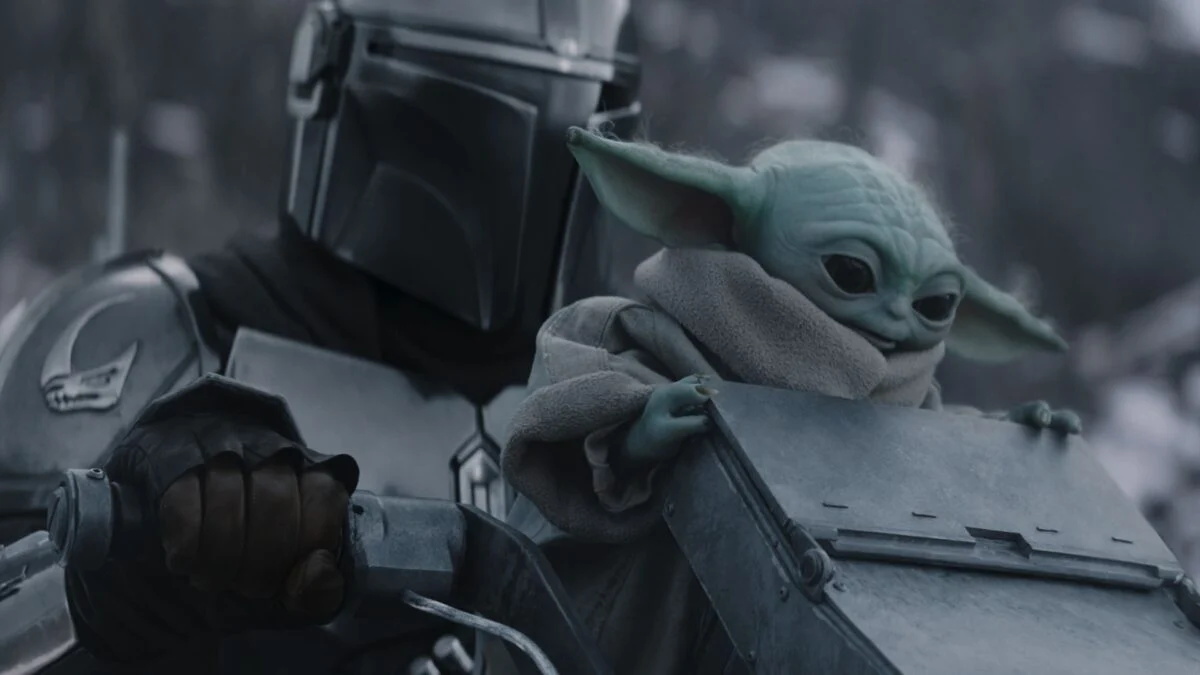
The lights dim, the screen flashes white, and the same snow-drenched assault sequence plays again. You feel the tug: thrill and irritation braided together. I watched it loop twice and realized Disney and Lucasfilm had a plan that was quietly doing its work.
I’ll tell you what I think they’re doing, why it matters for anyone deciding whether to buy a ticket, and where that leaves the rest of the movie’s surprises. Read this the way I read a press screening: fast, skeptical, and with an eye for what’s being withheld.
At press screenings the snow scene has become the movie’s public face
At press screenings the snow scene has become the movie’s public face. That clip—Mando and Grogu amid blizzards and heavy walkers—has shown up at CinemaCon, on Disney+, in trailers, and in theater reels for fan previews. The result is pleasingly simple: you recognize the tone immediately and the film’s aesthetic is stamped into every conversation.
This is marketing with a surgical feel. The opening minutes are operating as an attractor, concentrating all early impressions into one neat package. It’s intentionally selective: the campaign is funneling attention where it wants it and keeping other cards face-down.
Why is the opening scene of The Mandalorian and Grogu shown so often?
Because it sells. Snow, colossal machines, and a high-stakes skirmish give you immediate sensory payoff. It reads well in a 30-second cut and tests as sharable content on social platforms. You leave that first sequence with a clear emotional memory—curiosity tempered by satisfaction—which is exactly what studios pay agencies to manufacture.
At CinemaCon and in trailers the same beats keep reappearing
At CinemaCon and in trailers the same beats keep reappearing. Producers want a single durable image to anchor pre-release chatter, and this one checks multiple boxes: spectacle, nostalgia, and tonal continuity with prior Star Wars films.
There’s risk here. Show one scene too often and you risk the rest of the film feeling like filler—but there’s a payoff if the rest genuinely surprises you. The marketing choice has the faint whiff of a protective strategy: present the appetizer boldly and keep the main course under cover.
Will the trailers ruin the movie?
They might not. The repeated snow clip feels like a siren—impossible to ignore, but it doesn’t tell you who will survive, who switches alliances, or whether the plot detours into comedic territory with a guest like Rotta the Hutt. The marketing plays to the presentational strengths of the sequence without spilling structural secrets.
At Disney+ and in theaters the scene’s overexposure forces a bet on the unseen
At Disney+ and in theaters the scene’s overexposure forces a bet on the unseen. If the remainder of the film is rich and unpredictable, audiences will forgive repetition; if not, critics and chatter will label the campaign as compensating for weak material.
My read is that Lucasfilm and Jon Favreau (with Dave Filoni at the creative wheel) are protecting a plot thread they expect will land harder if audiences arrive with fresh curiosity. It’s as if the filmmakers had buttoned the rest of the film into a pocket watch—quiet, compact, and meant to be opened by the viewer at the right moment.
When does The Mandalorian and Grogu open?
The film opens on May 22. If you prefer minimal pre-release exposure, that single scene being everywhere is both a blessing and an annoyance: you haven’t seen much beyond the appetizer, but you’ve seen the most repeated image. If you chase every clip online, you may feel shortchanged by how little new information those clips provide.
I’m betting the rest of the runtime hides at least one major tonal shift and a surprise team-up that marketing doesn’t want leaked—Rotta rumors aside, there’s a possibility the film becomes something different after the first ten minutes. Which would you prefer: the comfort of the known opening, or the risk of walking into a movie with most of its goods still wrapped?