I opened Steam and felt something thin and worried pull at the back of my neck. You know that small guilt when a sale reminder flashes and you do nothing. This new indie turns that guilt into an actual fight.
My friends buy games during every sale. That habit is the starting pistol for Game Quest: The Backlog Battler, a solo project by Nic Taylor that turns your unread purchases into enemies.
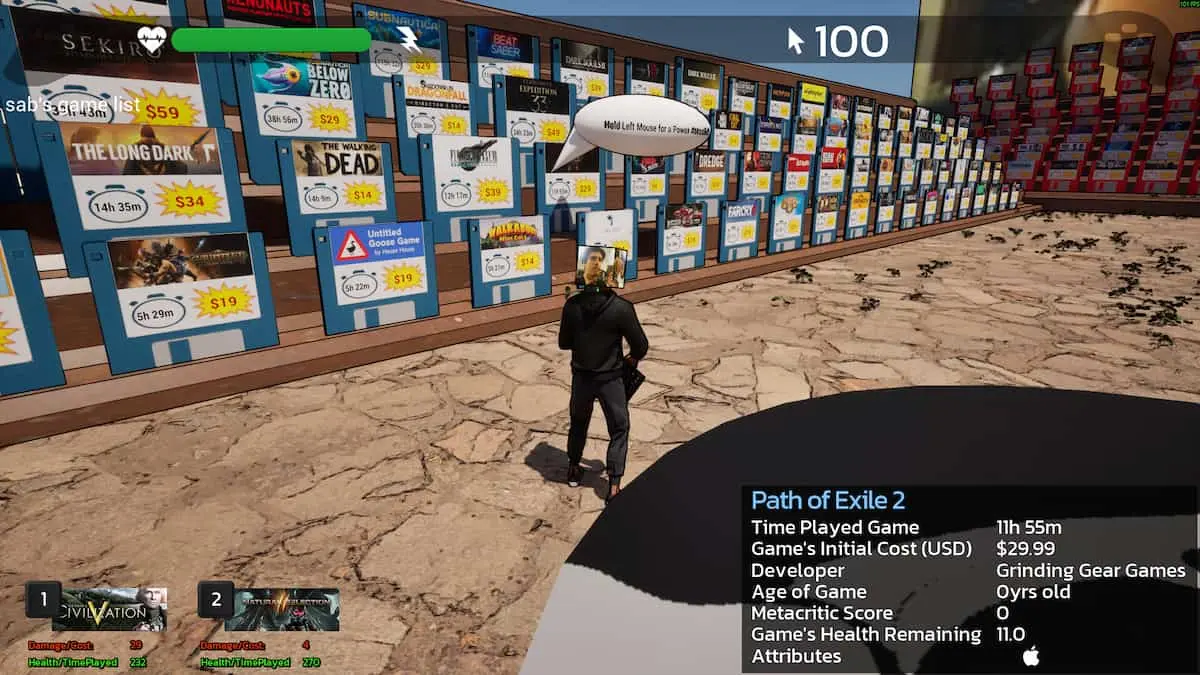
It’s simple and savage: the games you’ve never launched become immortal royalty at the end of the arena, while the ones you played briefly attack in waves. The description teases a brutal math of sin—”the more you paid, the more damage they will do to you (just like in real life).” If you shelled out $20 (€18) for a title and never played it, expect it to sting.
How does Game Quest use my Steam library?
It reads your library and displays real metadata: time played, purchase cost, platform support, and even Metacritic signals. High Metacritic scores become flying enemies. DLC tags, controller support, and platform badges change enemy types. You’re literally fighting the way you treated each purchase.
I logged into Steam and felt a tiny rush of shame. That’s the emotional mechanic the game exploits—guilt made playable.
Gameplay footage shows your time played and cost floating over incoming foes while you dodge and shoot. Games you tried for under two hours attack in waves. Your carefully curated shelf becomes a boarding arena, your ignoring becomes an active hazard.
Can I try it or add it to my wishlist?
Yes. There’s a demo and a Steam page where you can wishlist Game Quest: The Backlog Battler. You can find the demo and wishlist it on its Steam page: store.steampowered.com. The demo lets you see how time played, cost, and Metacritic weight alter enemy behavior in real time.
I have almost 600 games on Steam. That fact is both embarrassing and a credential for this review.
Your backlog is a ticking volcano. I admit it: I buy bundles, grab sales, and then forget half the list. Nic Taylor’s concept turned that habit into comedy and punishment. Social clips of the game have started trending—people love the petty accountability of seeing a pricey, unplayed game barge into an arena.
Will my playtime and purchases actually change the game?
Yes. The demo and footage make that explicit: time played affects enemy types, purchase price amps damage, and high review scores become trickier foes. The mechanic plays like a ledger given legs—every negligent purchase has a consequence, and it’s displayed with scoreboard clarity.
My timeline scrolled past clips of strangers fighting their libraries. That micro-story explains the social momentum.
Gameplay clips and screenshots are spreading on Twitter, TikTok, and YouTube. Streamers post short runs, laughing at the irony when a $60 (€54) purchase stomps them. Metacritic tags and platform flags add flavor, and the community is already inventing punishments and strategies.
Steam, Metacritic, YouTube, and indie dev culture are all pulled into this little experiment. If you’ve ever justified a purchase because “it was on sale,” remember that Steam sales are a candy store and your backlog has an appetite.
Wishlist and demo links are live, and if you want a laugh with a side of mild self-flagellation, the demo is a fast way to face the consequences. But will you actually let your backlog stomp you on stream—or will you finally clear a game and fight back?