
I was mid-coffee when the alerts flooded my phone: screenshots of supposed GTA 6 pre-orders, traders spiking bids, and a ticker that started to wobble. You watched the same thread thread through X and Reddit and felt that momentum shift. By Monday the halo of hope had collapsed — the rumor was a house of cards.
Traders scanning feeds on Monday morning saw a sudden spike — then a sell-off
I follow market chatter for a living, and I told clients to be wary the second the screenshots appeared. Over a single weekend, unverified images of “pre-order” pages spread across X, Reddit and Discord, and retail pre-order lists resurfaced in search results. That churn convinced some short-term investors to push Take-Two shares higher on pure expectation, not revenue.
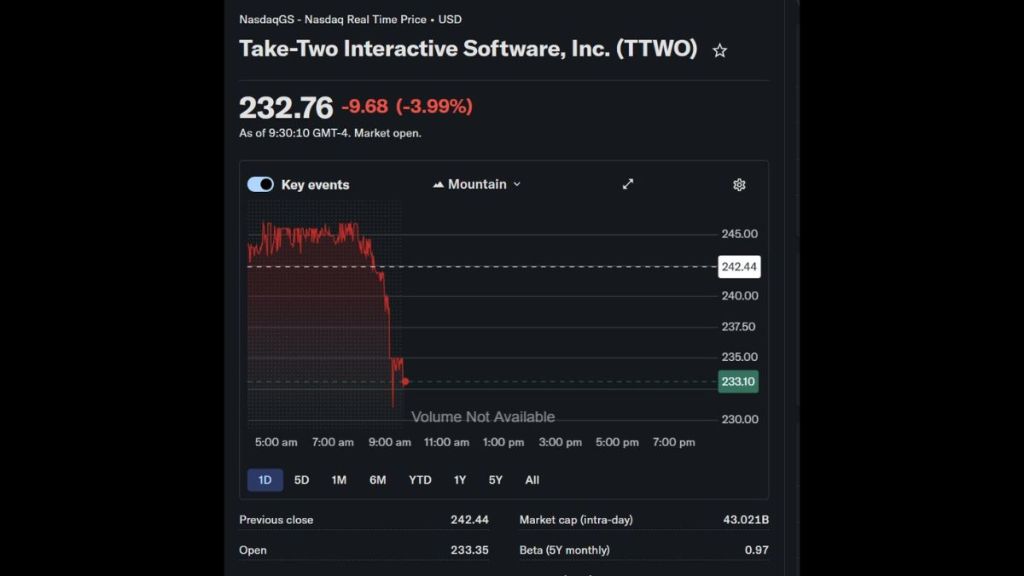
When traders realized the pre-order screenshots were fake, selling accelerated. Take-Two closed down roughly 4% intraday, slipping from $242.44 (€225) to a low near $232.76 (€216). That swing erased quick gains tied entirely to rumor-driven sentiment and lit up alerts on platforms like Robinhood, E*TRADE and interactive broker dashboards.
Fans and forums lit up with screenshots and speculation — then reporting agencies checked the facts
You can trace the leak path: a cropped screenshot on a fan subreddit, a repackaged post on X, then wider awareness as feeds and algorithmic recommendation amplified it. Bloomberg and CNBC reporters flagged the screenshots as unverifiable, which pulled institutional traders back from the rumor-fueled queue.
Why did Take-Two stock drop?
Because traders had priced in a near-term cash infusion based on alleged pre-order volumes, and when credibility evaporated the market repriced risk. The move wasn’t about product quality or delays — it was a liquidity reaction to false signals. When headlines from reputable outlets contradict viral posts, algorithmic and human sellers often move first.
Market behavior showed how fragile expectation-driven rallies can be
I watched order books tighten and stop-losses trigger across accounts monitored on Seeking Alpha and Bloomberg Terminal feeds. For a company whose next major release is the most anticipated entertainment launch on record, even small misinformation creates outsized volatility. The sell-off was a thunderclap.
Were GTA 6 pre-orders real?
No credible retailer or Rockstar announcement backed those screenshots. Rockstar Games and Take-Two have repeatedly kept their pre-order timetable private. Until an official page appears on Rockstar’s site or a verified retailer lists a legitimate SKU, you should treat any shared pre-order image as unconfirmed.
Analysts, retail platforms and community managers reacted — and the lessons are clear
Analyst notes that followed Monday’s dip emphasized patience: game publishers often stage controlled pre-order windows to protect margins and marketing cadence. For brand teams at Rockstar and Take-Two, the incident underlines how fast social rumor can shape short-term investor expectations, and how instruments like press releases and verified retailer listings still matter for credibility.
When will GTA 6 pre-orders start?
There’s no public date from Rockstar. Current public guidance still points to the planned November 19, 2026 release window, but a pre-order launch can come weeks to months before release. If you trade on headlines, track official Rockstar channels, major retailers, and confirmations on Bloomberg or CNBC to avoid being swept up by false posts.
If you follow gaming markets or trade event-driven moves, you learned something this week about rumor risk and information hygiene — did this episode change how you’ll trade or participate in fan communities going forward?