I pushed a suspect token onto a table and the room felt suddenly dishonest. A lamp rattled; a clue I had missed slid into place. That small click told me I was hooked.
I tested Murdoku because I like puzzles that force a small, stubborn change to a familiar rule set. You keep the cooperative grid logic of sudoku—one item per row and column—but you replace numbers with people and rooms, and the constraints become narrative clues instead of arithmetic. The result is a puzzle that reads like a case file and feels like a logic exercise.
The kitchen drawer is jammed.
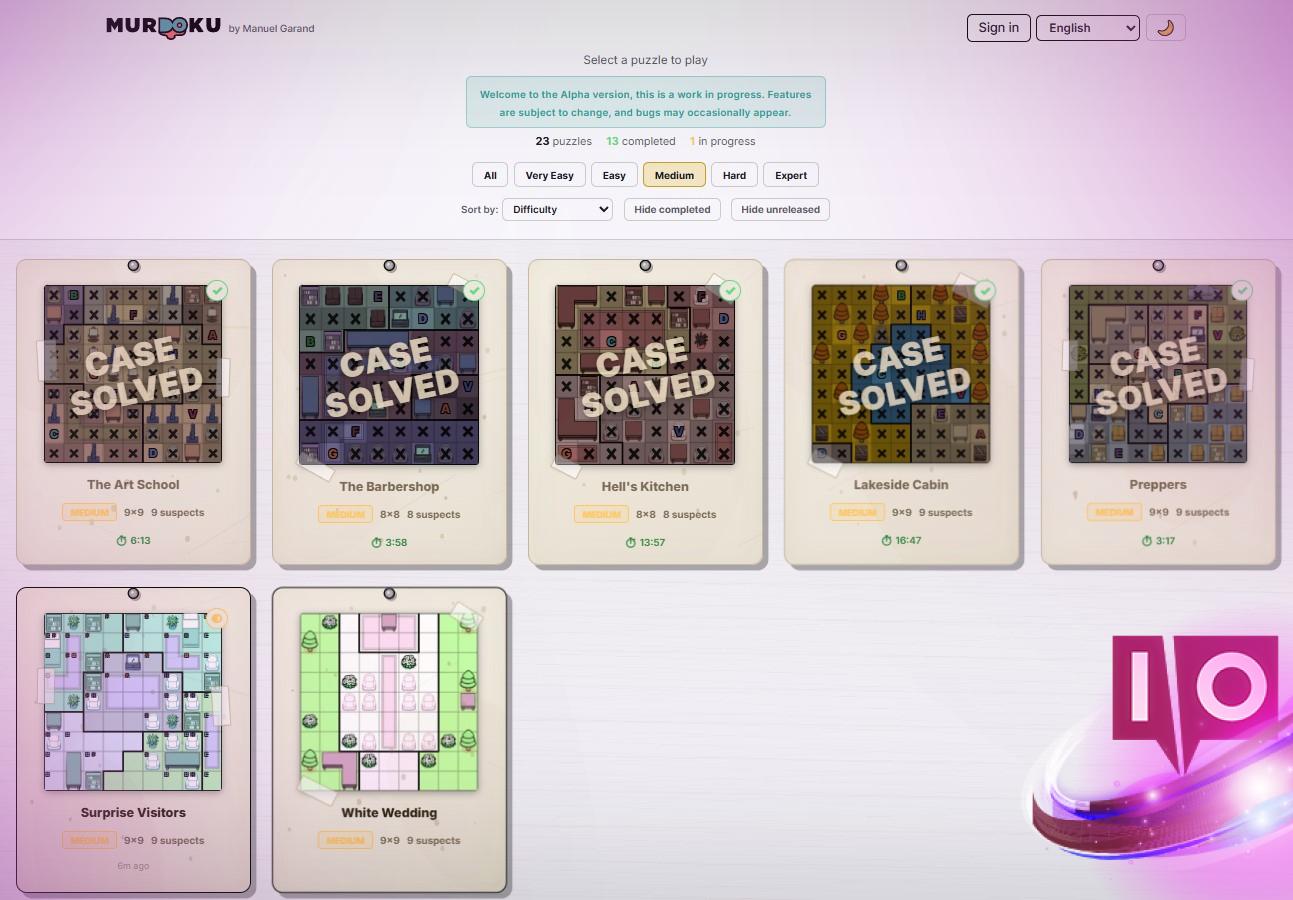
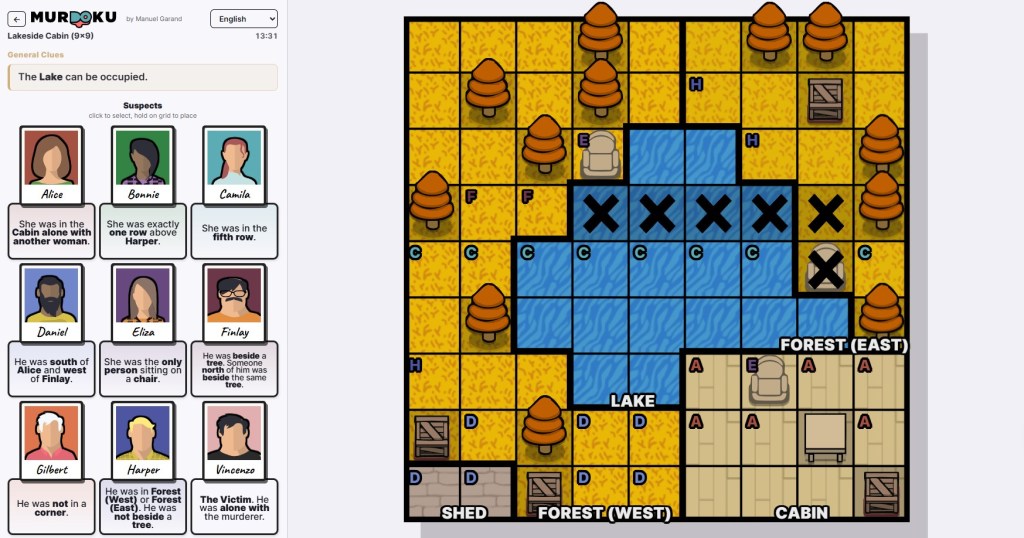
The game starts with a simple, tactile problem: place suspects and the victim so every row and column holds a single person, then use the written clues and the furniture’s physical limits to eliminate possibilities. If you know the Zebra Puzzle or Einstein’s Puzzle, you’ll recognize the thrill of deduction; if you only know classic sudoku, the swap from digits to narratives is instantly addictive. I play on the Murdoku web app (free at murdoku.com) and it scratches the same itch that NYT Games and Paper & Pencil logic grids do, but with a whodunit bent.
What is Murdoku?
Murdoku is a logic-puzzle variant that replaces numbers with people and rooms, and mathematical rules with murder-mystery clues. You arrange suspects and the victim on a grid, read statements like a detective, and use both elimination and spatial thinking to solve the case. It’s equal parts deduction and storytelling—think sudoku meets an Agatha Christie footnote.
The carpet still smells of coffee.
Pieces of the house act as hard constraints: a sofa blocks seating for two suspects, a shed is off-limits unless the clues point there. That furniture clutter can feel like a nuisance on harder puzzles, but it’s also what keeps the logic fresh. The mental work is less about arithmetic and more about sequencing—if the butler can’t be in a locked room and a footprint places someone elsewhere, the grid begins to breathe.
How do you play Murdoku?
Read the set of clues, mark impossibilities, and place each person once per row and column. Use the room layouts and item restrictions as extra rules—furniture can grant or deny access. I recommend pencil marks, pattern recognition, and patience; a successful solve often arrives like reading the margins of a confession letter.
The porch light is on, and the neighbor is watching.
There’s an emotional hook built into every puzzle: you’re not just filling a square, you’re finding motive and movement. That feeling keeps you scrolling and clicking—one deduction leads to another, momentum building until the killer is isolated. I found myself chasing small contradictions the way a detective chases an alibi, and the payoff is quietly satisfying.
Can I play Murdoku offline or buy a book version?
The web version is free to play; there are also printed puzzle collections you can buy. Paper editions often retail around $12 (≈€11), which is a gentle price for a portable mystery library. If you prefer physical solving, those books fit nicely alongside logic puzzle anthologies on your shelf.
The game screen shows a list of suspects with little icons.
Interface niggles exist: cluttered rooms can make visual parsing fiddly, and on long sessions the furnishings start to feel like noise. Still, the clues are well written, the difficulty curve is solid, and the experience pairs well with a notebook or a second monitor if you like digital puzzle streaming on Twitch or YouTube. Puzzle communities on BoardGameGeek and r/puzzles appreciate Murdoku’s twist, and reviewers at Moyens I/O gave it a favorable nod for good reason.
If you want a brain game that rewards patience and pattern-hunting, this one blends narrative satisfaction with clean logic. It’s a spiderweb of clues that tightens as you eliminate options—small, precise, and quietly vindicating. Would you trade an evening of Netflix for a case to close?