
I was in a dim conference room when the first AI render appeared on the screen. Everyone nodded—approval folded into relief. The lead said, “That gets us to the right answer faster.”
I call that a surrender, and you should care because the decisions made in rooms like that shape the games you’ll buy. I’ll walk you through why Crystal Dynamics’ move to lean on generative AI feels less like progress and more like a cost-saving shortcut, and what that means for ideas, artists, and players.
At a sprint review, an intern swaps a hand sketch for an AI mockup — why the swap matters
Jeff Adams of Crystal Dynamics told Game Informer that the team uses generative AI to “get to right answers faster.” You can see the logic: generate a handful of visual ideas in minutes, pick one that looks safe, then hand it to the art pipeline. But “right answers” can mean “least risky answers.”
Generative models—whether someone plugs prompts into Midjourney, DALL·E, Adobe Firefly, or an in-house tool—tend to output the statistical center of their training data. The result is polished mediocrity: visuals that please but don’t surprise. When a studio treats that output as the starting gate rather than an experiment, it narrows the possible futures for a project.
How is generative AI used in game development?
Short answer: for speed and visualization. Teams use AI for mood boards, iterative concept thumbnails, and quick environmental riffs. Crystal Dynamics says they generate concepts, then “move it to our traditional pipeline” if the idea passes a gut check. In practice that means AI helps artists get to a workable visual faster, but artists still do the final craft—if leadership allows them to.
On the Steam page, the credits note AI use — why disclosure isn’t the same as scrutiny
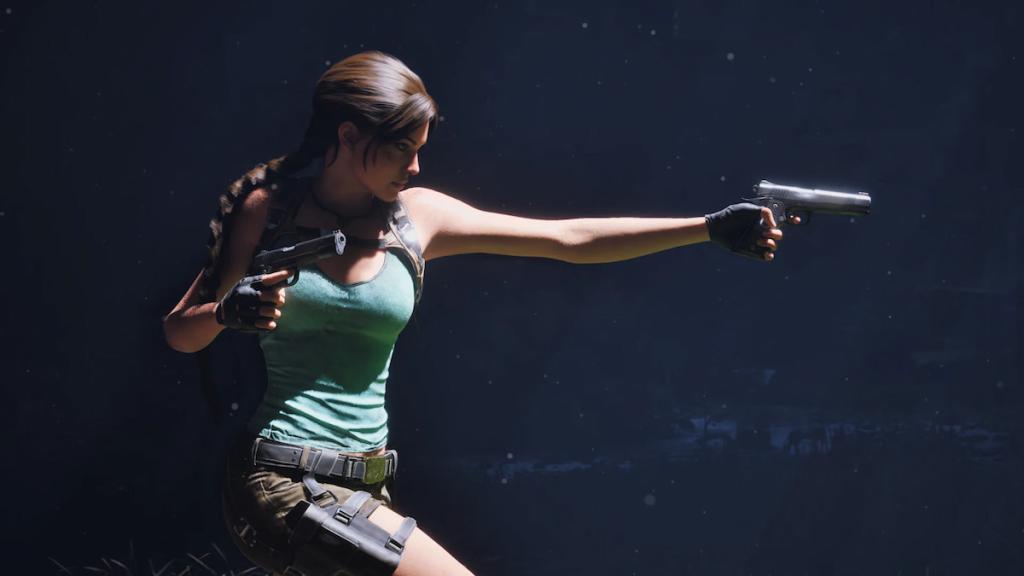
Steam now lists AI credits on game pages; Crystal Dynamics added such a note for Tomb Raider: Legacy of Atlantis. That’s a real-world signal that studios are formalizing the role of algorithms in art.
Disclosure is a start, but it’s not oversight. Who audited the models for bias? Which datasets trained them? When a tool is treated like a helper instead of a collaborator, you get riffs that echo existing work rather than stretch toward the new. The worry is financial pressure: if one department shows $1M (€930,000) in savings by shaving concept time, the argument for human-driven exploration grows weaker.
Will AI replace human game artists?
No—at least not in the short term. AI is a force multiplier: it replaces repetitive idea generation, not judgment. But replacement can be indirect. If studios rely on generated visuals to greenlight directions, junior artists may get fewer chances to iterate from scratch. That erodes skill-building and reduces the pool of truly novel contributors.
In weekly director updates, the phrase “make it easier” recurs — and that reveals studio incentives
Directors want predictable schedules and predictable budgets. You see it in meeting notes, in roadmap charts, and in the language leaders use when they brief stakeholders at Square Enix or Embracer Group. That’s a real-world observation about how business rhythms shape creative choices.
What worries me is the behavioral change: teams stop testing risky ideas in-engine and instead test them in prompt windows. The AI churns out visuals like a photocopier—efficient at repetition, poor at invention. When “easier” becomes the goal, experimentation becomes a checkbox instead of a method.
I won’t pretend every use of AI is malign. Nvidia’s tools help with upscaling; Unreal Engine and Unity integrate AI-assisted workflows that can speed iteration. But speed is not the same as discovery. If studios treat generative images as the final test, rather than a starting hypothesis to be played and failed with, we lose the messy experiments that led to truly memorable mechanics and worlds.
You can call it pragmatic. I call it a slow narrowing of taste. The pipeline starts to read like a weathered map pointing to safe harbors, and the storms of genuine risk get edited out upstream.
So here’s the question I’m leaving on the table: if games stop being places where studios teach themselves to think differently, what will you buy five years from now?