
I remember the first time I sat across from a researcher wearing a helmet that hummed like a low-key threat. You watch someone type while a machine listens to the electrical echo of their mind, and a small part of you goes quiet. If you stay long enough, you start to worry who will be listening next.
I want you to hold that unease. I’ll walk you through what Conduit is doing, why strangers will take $50 to $55 (€46–€51) to let a device read their brain signals, and what it means if a company turns thought into data you can buy or sell.
In 1908 a Columbia professor bragged he had built a “psychometer” that could read thoughts
Frederick Peterson told the Seattle Star his machine—part mirror, part lamp—behaved almost like sorcery when certain words triggered “emotional complexes” in subjects.
That was fraud dressed as novelty, but the impulse hasn’t faded: humans have wanted a direct line to minds for a century. Today’s version is science-heavy and algorithm-driven. Meta’s Brain2Qwerty and startups such as Conduit claim progress by combining neuroimaging and massive language models rather than parlor tricks.
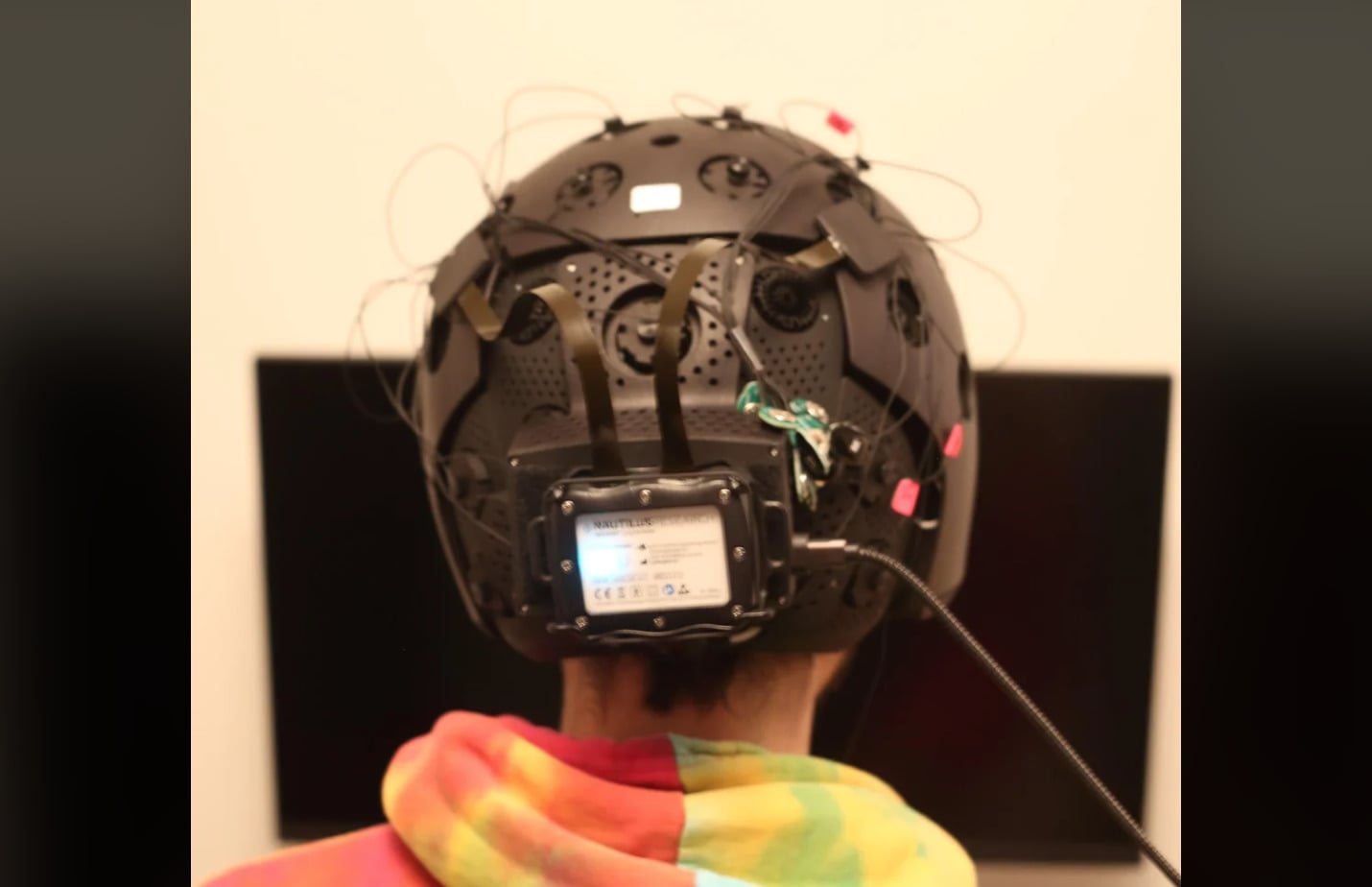
At Conduit’s office volunteers wear a four-pound, electrode-studded helmet and talk for two hours
People are being offered $50–$55 (€46–€51) to have “freeform” conversations while their brain waves are recorded; sessions cap at 32 per participant.
I’ve read Conduit’s posts and recruitment blurb: some sessions are listening and speaking with a large language model, others are reading and typing. The stated objective is simple—get as much typed or spoken behavior from the subject as possible during the two-hour block.
In private conversations insiders describe a vision of “telepathy at scale”
Conduit’s founders—Rio Popper, who went blind at five, and Clem von Stengel—say their aim is noninvasive telepathy: a wearable that sends commands to AI assistants through thought instead of text or voice.
Naomi Bashkansky, who left an alignment role at OpenAI to join Conduit, has publicly called the effort “frighteningly ambitious” and imagines using a headband to tell an assistant to run code in the same breath she plans coffee. She even predicts the company could be worth more than $1 trillion if the tech works.
Can AI actually read your thoughts?
Short answer: not yet the way true telepathy is imagined, but AI can map patterns of brain activity to words and actions when paired with massive labeled examples.
I’ll be blunt: current systems do statistical prediction, not mind-reading in the sci-fi sense. Meta’s Brain2Qwerty, OpenAI-backed research, and Conduit all rely on correlating scans or EEG signals with what a person says or types. That correlation improves as you feed more synchronized brain + behavior pairs into a model.
At data scale the problem becomes one of translation, not magic
Conduit is collecting thousands of hours of paired brain signals and typed text—data that trains models to guess what those waves mean.
The helmet acts as a stethoscope for thought. With enough examples, the system learns the most likely meaning of a pattern and outputs text. But noise, individual variability, and task differences keep accuracy far from perfect.
How does Conduit’s headband work?
The startup uses noninvasive electrodes to read scalp activity, then aligns those signals with speech and typing while large language models provide context.
Think of it as a translator’s ear inside your skull: sensors capture electrical patterns, models convert those patterns into candidate words, and heuristics rank the best matches. The company says it will refine the hardware and models until the headband becomes a reliable input method for assistants such as those built on OpenAI or other platforms.
In public recruitment posts the company offers money and a 32-session cap per user
Recruits must type without looking at their fingers; sessions aim to maximize verbal or typed output during two-hour stretches.
That constraint matters. The quality of any brain-to-text mapping is only as good as the parallel behavioral trace. Conduit’s choice to incentivize repeat sessions creates longitudinal data, which is far more valuable than a single snapshot.
Is this safe and private?
Short answer: safety and privacy depend on policy and architecture, not just the helmet.
You should care about consent, data ownership, retention, and model reuse. Will your neural data be sold to advertisers or used to fine-tune other models? Conduit hasn’t published a full privacy white paper; industry names from Meta to Neuralink have faced intense scrutiny over data governance. The absence of clear rules is the risk you sign up for even if you’re only after the $50–$55 (€46–€51).
On the research side, big players are testing similar promises in controlled ways
Meta’s Brain2Qwerty and labs working with implanted arrays have shown translation of neural signals to text or cursor movement in tightly constrained tasks.
Implanted devices at Neuralink or academic centers get higher signal fidelity, and companies that lean on surgically implanted arrays report faster progress on granular control. Conduit’s bet is that software plus noninvasive hardware and huge datasets can close some of that gap without surgery.
In recruitment messages the startup frames this as empowerment for people with ALS and other conditions
That framing is familiar: make a product that helps disabled people, then broaden it to a consumer market.
There’s real humanitarian potential here. But there’s also a marketplace logic: once an interface works for people who must have it, companies commodify it for productivity, gaming, or social apps. The training data that improves a medical aid also improves a consumer feature that could be monetized.
Across interviews and posts insiders mix hope and alarm
Naomi Bashkansky writes about talking to an assistant that “feels like magic,” and others warn of ambiguous consent and surveillance risks.
The training data Conduit collects is a map of whispered routes through people’s private mental habits. If models get good enough, companies face choices about monetization, access, and regulation.
I’ve watched these conversations move from lab notes to press releases to recruitment forms that pay actual money. You can take the $50–$55 (€46–€51), sit in a chair, and let electrodes record your conversation, or you can wait and let someone else build the model on your behalf.
Which side of that bargain will you pick when telepathy becomes a product that delivers convenience in exchange for the contours of your attention and thought?