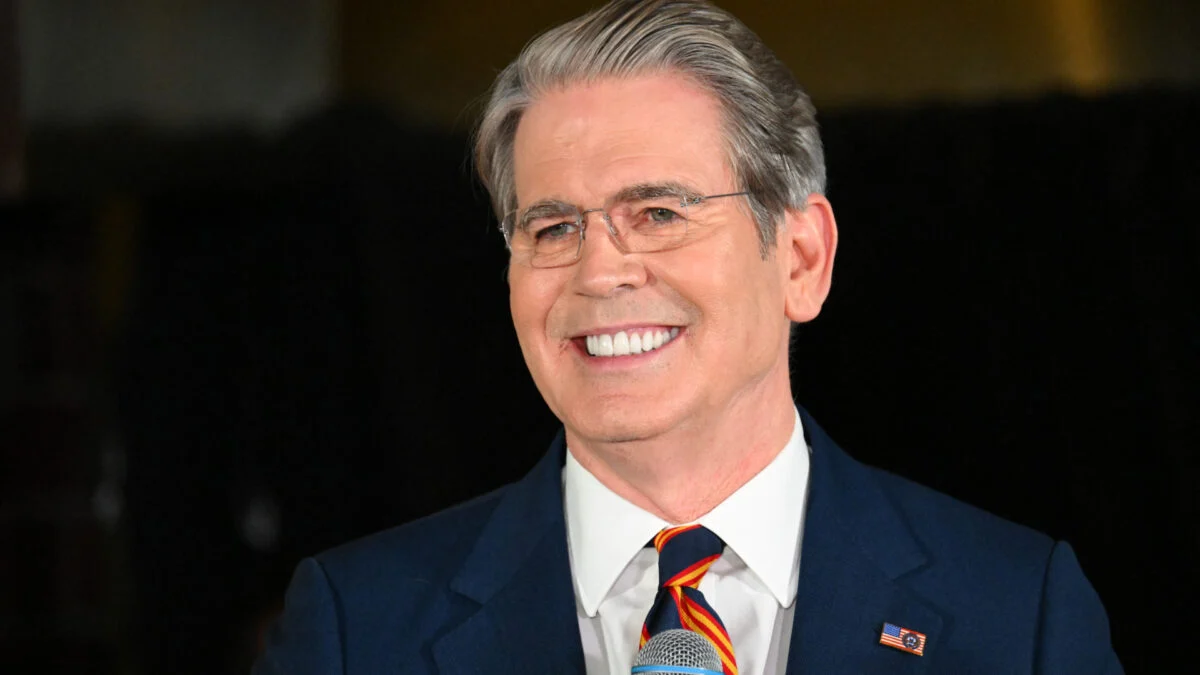
I watched the live feed flicker the words “AI Czar” across the screen and felt the room tilt. You could almost hear aides re-sorting priorities—defense, diplomacy, debt, now code. For Scott Bessent, the rumor reads like a crossroads that could reroute his entire public career.
I’ll walk you through what’s true, what’s rumor, and what it would mean if the White House hands one person authority over America’s AI posture. Read this like you’re holding the map while I point out the landmarks.
In the hallway outside the Oval Office, whispers travel faster than memos.
Semafor, citing three unnamed sources, says President Trump is weighing moving Treasury Secretary Scott Bessent into an AI role. The same report throws two other names into the ring: Michael Kratsios, who runs the Office of Science and Technology Policy, and Scott Kupor, mentioned as a potential candidate.
This is more than a personnel shuffle. Bessent has been treated inside the administration as an AI authority for months—he flew to meet Chinese Vice Premier He Lifeng to sketch out joint safety measures in talks covered by Reuters. On CNBC he framed the idea of an AI czar as a way to “put context, shape and contours around these questions.” You can hear the tension between diplomacy and doctrine in that wording.
Who is Scott Bessent?
Bessent is currently serving as Treasury Secretary and has emerged as the White House’s go-to figure on AI policy. He’s built relationships with finance and tech leaders, sat at international tables, and signaled appetite for multilateral AI talks. If you follow Treasury briefings and White House pressers, his name is already appearing where AI and economic policy overlap.
At a trade table in Beijing, a handshake became the opening line of a negotiation.
When Bessent met He Lifeng, the conversation wasn’t ceremonial. It was about whether two rival powers can agree on safety guardrails for rapidly advancing models. That kind of diplomacy requires someone fluent in markets and models—someone who can translate risk into rules.
He’s like a translator between code and capital, moving between investors, regulators, and engineers. If you want a single person to carry coordination across agencies and across borders, that interdisciplinary fluency matters.
What does an AI czar do?
An AI czar would likely coordinate federal agencies, advise the president, and act as the administration’s public face for AI policy. Expect engagement with major players—OpenAI, Microsoft, Google/DeepMind—and with international counterparts. The role can blend policy, enforcement, and public communication: part diplomat, part regulator, part PR chief.
On Truth Social, a poll can change policy tone within hours.
Trump announced on Truth Social he wants an “AI Force” and publicly polled followers to rename AI—first “Superior Intelligence,” then “Super Intelligence,” which he now says he’ll use on official documents. The messaging is both marketing and governance; he’s trying to socialize a label while building a brand of oversight.
David Sacks, who had served as Trump’s AI and crypto czar until March, stepped down because of rules around special government employees. That vacancy is one reason the search is visible and fast-moving.
The title “Super Intelligence Czar” lands as if a patent were stamped on the future, which raises the question: are we naming policy or rebranding power?
Could Bessent actually take the role?
Short answer: plausible. Semafor’s anonymous sourcing is the same kind of reporting that flagged earlier White House personnel talks. Bessent’s recent pivot toward AI—prompted by concerns about payments rails, national security, and the tech sector’s rapid growth—makes him a natural pick if the administration wants someone already inside and trusted.
But politics matters. Moving a sitting Treasury Secretary creates gaps at Treasury and fuel for opponents in a tight midterm environment. It also invites scrutiny over whether a single czar should have so much sway over both domestic enforcement and international AI norms.
Here’s what to watch next: official White House announcements, a formal nomination or appointment, and whether Congress or industry push back. I’ll keep tracking the signals—moves in Beijing, posts on Truth Social, and the quiet memos that become headlines.
If one person ends up steering U.S. AI policy, will that stabilize the field or concentrate too much power in one office?